BETT 2024 highlights
What was hot (or not) at BETT, latest AI developments, a round up of digital news and try Loop for free
What’s been happening
Another year, another Bett and, as you would expect, AI was everywhere, from products to presentations. However, the highpoint for Sarah was, of course, presenting on blended learning pedagogy in European primary and secondary schools. It was great to have colleagues from Denmark, Finland and the Netherlands in the audience. Thanks to the Bett content team, who are always lovely to work with and to James Garnett for introducing us. (Here’s James’s take on Bett week.)
Oh…and we've even got the T shirt…(with our names):
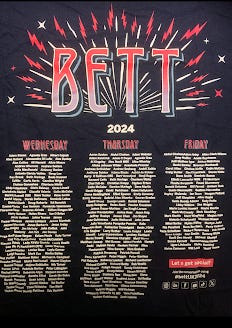
A fresh format this year was table talks – 45-minute peer group roundtable discussions connecting groups of five to eight educators from schools, universities and governments based on their primary topics of interest. It's not easy to create the right kind of mix of experiences on a table and facilitate high-quality discussions for 60+ people but the organisers seem to have succeeded.
Our colleague from the FabLab in Middelfart, Denmark, said that for her the best aspect of the table talks was being able to share experiences with educators from a range of countries. She remarked on how teachers from every country are interested in using AI but are still exploring and reflecting on how to make the most of it effectively. She noticed that educators from Italy and the UK were most focused on time saving for teachers whereas other countries were much more interested in AI literacy.
Another useful session was Peter Wanless and Jim Steyer on digital literacy. Common Sense UK’s digital literacy scheme is now being trialled in Wales and is likely to be made available to all UK schools, adapted by organisations including the NSPCC.
Lex Lang encouraged us to have a look at Caterham’s partnership project, the Sphinx Riley Bot – see his comment on LinkedIn. It uses ChatGPT 3 and describes what a child needs to do, with age-appropriate responses and built-in safeguarding. Parents of children under 13 have a dashboard to see their child’s conversation with the chatbot and there’s also a teacher dashboard. It's around £2.50 per pupil per month.
Conversely, we heard mixed views about Minister of Education Gillian Keegan's keynote speech (we shared the transcript last week). Some teachers we spoke to in the audience were unhappy with the implications they perceived that AI will do the teaching in the future, and several people pointed out that focusing on Khan Academy’s KhanMigo AI and referencing a ‘virtual George Washington’ at an event showcasing UK edtech was just peculiar.
AI roundup
Generative AI and computing
No apologies for the fact we keep sharing Miles Berry’s slides – they are always so relevant and thought provoking. This set looks at the potential and challenges of AI in the English computing curriculum.
AI does maths
Logical reasoning for mathematical problem solving has, up until now, been a weak area for AI, partly due to a lack of training data compared with text-based AI models. However, Google DeepMind has created an AI system that appears to be able to solve complex geometry problems – a significant step in developing more human-like problem-solving skills in machines. Find out more from the MIT Technology Review.
Science Journal for Kids
Thanks to Linda Mannila for sharing the Science Journal for Kids and Teens, which features hundreds of peer-reviewed science articles rewritten in a child-friendly, scientist-approved way. For example, see these lesson ideas and videos about deep fakes.
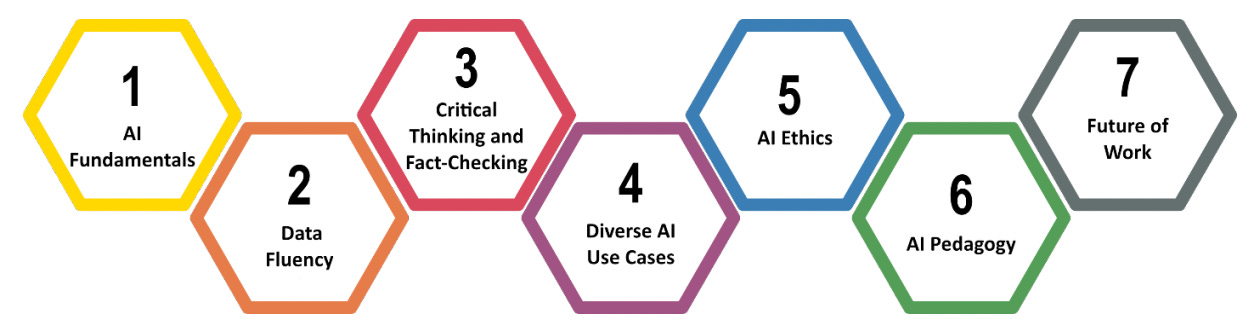
AI literacy competency framework for educators
From Paradox Learning, this AI literacy competency framework does what it says on the tin, covering seven key topic areas – AI fundamentals, data fluency, critical thinking, use cases, ethics, pedagogy, future of work – with 50 competencies.
AI chatbots in education
This ‘state of the art’ review of 23 studies into how GenAI is used by students is focused on higher education but it usefully identifies theories of learning around chatbot use in education.
See also, more than half of UK undergraduates say they use AI to help with essays
Quick links
Check our Parent Zone’s latest straightforward guides to the online platforms and games teachers and parents need to understand, from 4Chan to Roblox games and Animal Crossing.
Give Naace a hand by filling in its survey on where schools are now with edtech. It’s part of research looking into how ready schools are to make the most of technology.
Meta is in the firing line over new evidence of its disregard for prioritising children’s safety online.
Many of the conversations we’re having about AI with headteachers focus on how they are exploring time-saving practices using AI in their schools. We’re interested in this list from the DfE of things teachers shouldn’t be doing. Will those tasks fall to school business managers and admin teams? How might AI help them and how much extra work does digital technology create as well as save?

A £6,000 robotic seal for your classroom? Why not! The price for this interactive, therapeutic robot seal (yes, as in the animal!) is out of range for most UK schools, but our early years colleagues from Tampere in Finland told us about how they share these seals across all their schools and pre schools to support social and emotional learning.

We’re listening to, reading, watching…
We’ve been really interested in the latest research showing that diverging attitudes to social values – such as feminism and racial justice – in Gen Z are increasingly determined by gender. An ideological gap has opened up, with young women increasingly progressive and young men increasingly conservative – and it seems to be a global phenomenon, as the FT’s chief data reporter shows.
A new study from King’s College London’s Policy Institute and the Global Institute for Women’s Leadership indicates that boys and men from Gen Z are more likely than older baby boomers to believe that feminism has done more harm than good, and a fifth of those who have heard of social media influencer Andrew Tate now regard him favourably. According to researcher Prof Rosie Campbell, “The fact that this group is the first to derive most of their information from social media is likely to be at least part of the explanation”, with the echo chamber effect featuring strongly. There’s more on this in an interesting discussion between the researchers on yesterday’s Woman’s Hour.
Give it a try
Microsoft’s Loop
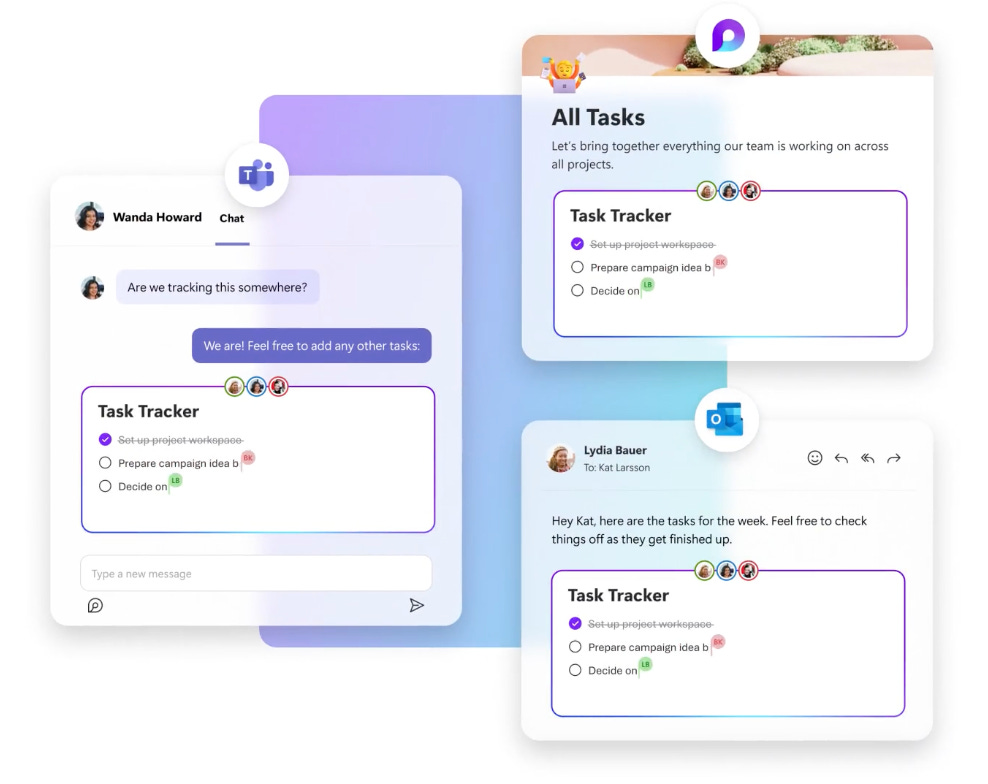
Last week we suggested trying Reading Coach. Sticking with the Microsoft theme, did you know you can use its Loop with your school account? It’s a collaborative work app featuring Copilot that lets you and your students work together on content, ideas and projects using three elements: components, pages and workspaces. Useful or too complicated? We’d be interested to hear your thoughts.
Connected Learning is by Sarah Horrocks and Michelle Pauli