No 112: AI and teens
AI and homework, new Siri, GCSE Computing drops, screen-free Mondays, five things about AI, end of the world as we know it, weird and wonderful digital V&A, and much more...
What’s happening
We’re heading straight to the news, views and resources this week. Don’t forget, if you’d like to share an account from your own practice, your thoughts on digital developments in education or any tips or feedback – please drop us a line on email or catch us on LinkedIn.
AI roundup
Teens divided over AI use for schoolwork
New research from the Oxford University Press, Navigating AI in Education Pupils’ perspectives on the role of AI in the classroom, has looked at how teens approach using AI in their school work, and the picture is more nuanced than some might expect from the frequent headlines about young people “cheating”.
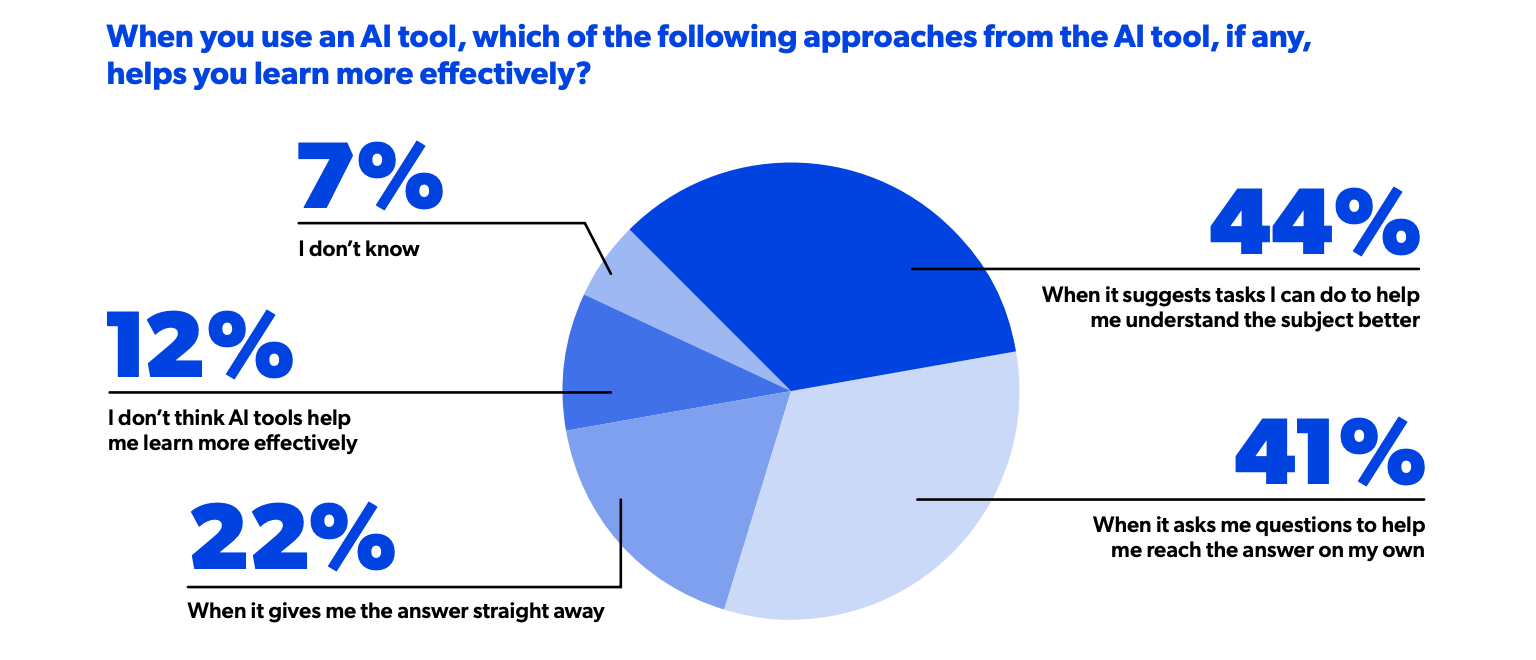
The study finds that teenagers do not use AI as a default for homework with only one in four (24%) regularly seeking out AI tools. Furthermore, one in three (34%) only use AI tools to help with their homework if suggested by their teachers compared to just 13% who are influenced by their friends. They see the appropriate use of AI as a grey area – only four in 10 (44%) think it is cheating to use AI to complete all of their homework, but almost one in five also think it is cheating to simply ask any AI tool to give them homework tips. They want more support from schools, with just 15% of students stating they have been given enough guidance, and they emphasise their teacher’s unique value – 73% pointed to a skill their teacher has which AI can never replace, such as personability, empathy and human understanding. Four in 10 students (39%) are more excited than worried about the impact of AI on their education, compared to 16% who said they were more concerned and less than one in three (30%) who felt neither way.
Pair with this post from Matthew Wemyss post reflecting on students who don’t want to use AI. He describes a situation in which a student asked not to use Canva Code for her class project because she thought it was “lazy”. Wemyss came up with a workaround that didn’t involve using AI and says that the exchange stayed with him because,
“...we have spent enormous energy worrying about the student who leans on AI too much, and almost none on the student who looks at the tool we have placed in front of them and says, on principle, no. If a child has done the thinking, made the case, and chosen a different path, what gives us the right to force the tool back into their hands? Could you ethically compel a student to use AI? The goal was never the tool. It was the thinking.”
Teens, tweens and AI
Meanwhile, Common Sense Media offers a US perspective with a study surveying a thousand 9-17-year-olds that will repeat every year to learn how this generation’s relationship with AI evolves over time. The report highlights:
Children are using AI for many things. It’s not just a homework helper anymore. For some children, AI has become a confidant, even though research has shown that AI companionship is not safe for anyone under 18.
Guardrails are thin to nonexistent. Schools are talking about rules more than safety. Three-quarters of children say their school has discussed what they can and cannot use AI for, but just over half have been taught how to use AI safely.
As with smartphones and social media, the conversation is lagging behind the technology. Nearly half of children have never had a conversation with their parents about AI safety.
Apple announces new child safety features
Apple has revamped how its devices handle children’s accounts on iPhones and iPads to prioritise safety and give parents greater customisation over their children’s behaviour. New safeguards limit what content children can see, who they can talk to and when they can access particular apps. According to the Guardian’s report, a new safety feature allows parents to require their kids to ask them for permission before browsing new websites in Safari. Another proactively monitors messages for gore or violence and blurs them.
Quick links
UK PM Sir Keir Starmer has called on major tech firms to implement stricter, built-in blocks to prevent under-18s from taking, sending, or viewing sexually explicit images on their devices.
GCSE computing entries have dropped by 10,000 in two years, and fell by 7% compared to the previous year.
Researchers find that YouTube is the most popular video-sharing platform for young children and is “largely characterised by low content quality”.
Raspberry Pi has a fine range of AI literacy resources – and also suggests ways to build confidence to teach AI in the classroom
Meanwhile the Guardian highlights a London primary school where a pupil has instigated screen-free Mondays for everyone – staff, students, parents.
We’re reading, listening, watching…
Making computer science tangible for children
In this Education Futures podcast, computer scientist, children’s author and illustrator Linda Liukas talks about why “learn to code was never about learning to code” – and what it was really about. She argues that, in the age of AI, teaching the foundations and underlying ideas of computer science matters more than ever. She also offers lessons from the Finnish education system — its rise, its PISA scores, and the worrying trends – and what three things the French education system is teaching her son that will serve him well in the age of AI. Linda also recommends Annabel Blake, an Australian researcher who has done fascinating PhD work on young people and AI companions.
Learning analytics – what do students think?
Hannes Hautz (University of Innsbruck) talks to Neil Selwyn about his research on students’ mixed reactions to learning analytics, and how we can ensure more equitable and reflective use of student data.
Five things about AI
Last year we featured Will Douglas Heaven’s five things you need to know about AI from his SXSW London talk – and this year’s he’s done the same, with five completely different things. He talks about how AI “has got scary – for real” this year (think deepfakes, delusional relationships and warfare) and the rise of anti-AI protests, but also how the potential for AI to help make a genuine and important scientific discovery is greater than ever.
The end isn’t nigh?
Some words of reassurance (sort of) from Oliver Burkeman in these troubled times of digital radicalisation threatening democracy. Whether it’s AI destroying all humanity or climate change causing complete ecological collapse, he argues that we’re almost certainly not living at the end of human civilisation and it’s pretty unlikely we’re even on the cusp of unprecedented levels of disruptive change. Times have always been dangerous, he argues, and we tend to feel that the time we’re living in now is the most significant or terrifying one ever – simply because it’s the one we happen to be around to experience. And the good news?
“Anything could happen at any moment, the future is unknowable, one day you’ll die, and some people end up having vastly more traumatic encounters with these realities than others. Against this backdrop, AI doomerism starts to look like a coping mechanism for dealing with existential anxiety. If life is unavoidably insecure, there’s nothing to be done; but if the cause of the insecurity is rogue technology, suddenly there’s hope, however slim: rein in the rogue technology, and the insecurity might go away. … Yet there’s a stunning bit of good news hiding in all this grim inevitability, because if radical insecurity is just how life is, then by definition, you’re already coping with it.”
Give it a try
Mused
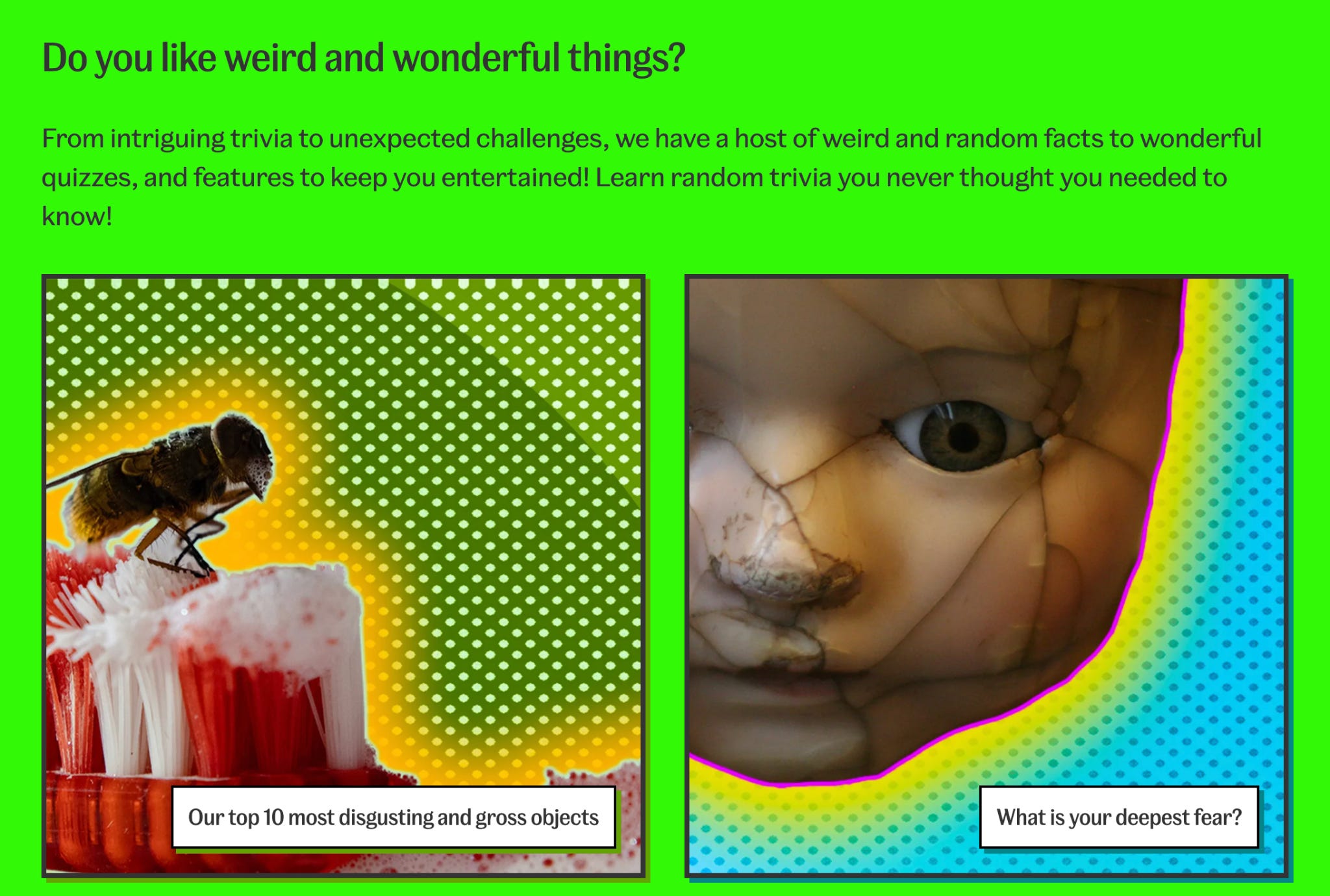
Thanks to Chris Unitt for sharing mused. Built by the V&A, it’s a content platform for 10- to 14-year-olds with more than 2.5 million users, reaching younger audiences through creative quizzes and videos that celebrate art, design, fashion, film, music, pop culture trivia. Read this guest post with Kati Price, Head of Experience and Digital at the V&A, who explains that while there are plenty of digital products for younger children, the critical age group of 10 to 14 year olds had very little designed for their interests and needs online.
Connected Learning is by Sarah Horrocks and Michelle Pauli