Playful minds
Digital literacy in Denmark, revealing Roblox, Ofcom's child online safety code, staying digitally safe in authoritarian regimes and much more...
What’s happening
A week of innovation, thinking and playfulness in education
While UK schools were closed for the Easter holidays, Sarah was in Denmark working on the Co-Create Erasmus project with teachers, school leaders and education advisors from Finland, Iceland, Denmark, the Netherlands and Sweden. The three-year project focuses on enabling teachers and headteachers to guide the integration of digital literacy into their school culture within the broader educational context in which they teach.
"How do we prepare children for a world where social media shapes their understanding before they can critically evaluate it? Is there a mental health crisis fueled by information online? Is AI rewriting the rules of employment faster than our curricula can adapt? How can we support critical thinking without increasing cynicism and mistrust? What is the purpose of education in a technology driven world?”
Among the digital anxieties teachers identified as prevalent challenges for their students and families we also discovered profound hope in playfulness, design thinking, learning through movement and joyful curious learning.
The project adopts the European Commission's definition of digital literacy. This states that digital literacy involves the confident, critical and creative use of information and communication technology to achieve goals related to work, employability, learning, leisure, inclusion, and/or participation in society using the skill set outlined in the DigCompEdu framework. This covers five key areas: information and media literacy, digital communication and collaboration, digital content creation, responsible use and problem solving.
The Danish education system
In Danish schools, where learning emerges through exploration rather than rigid outcomes, we witnessed children using machines and tools safely in craft classes, designing with digital tools, and solving complex problems through play. This compelling contrast – between our shared concerns about technology's impact and the joyful, curious learning happening before our eyes – captures the essence of our Erasmus project meeting in April 2025.
Throughout the week, through observations in school, practical workshops, guest speakers and a visit to the Lego House, we discovered that what distinguishes the Danish approach is its remarkable continuity of purpose. From NFS Grundtvig's early vision and revolutionary philosophy prioritising "the living word," lifelong learning through folk high schools, and community connection to contemporary practice, the Danish system has consistently prioritised student development over standardised achievement, community over competition, and creative exploration over rigid instruction. This centuries-long commitment has produced an education system where students aren't graded until age 14 and the development of the whole person takes precedence over narrow academic metrics.
Teachers from each school shared their "Learnathon" action research projects, which applied computational thinking in diverse classroom settings.
Design circles
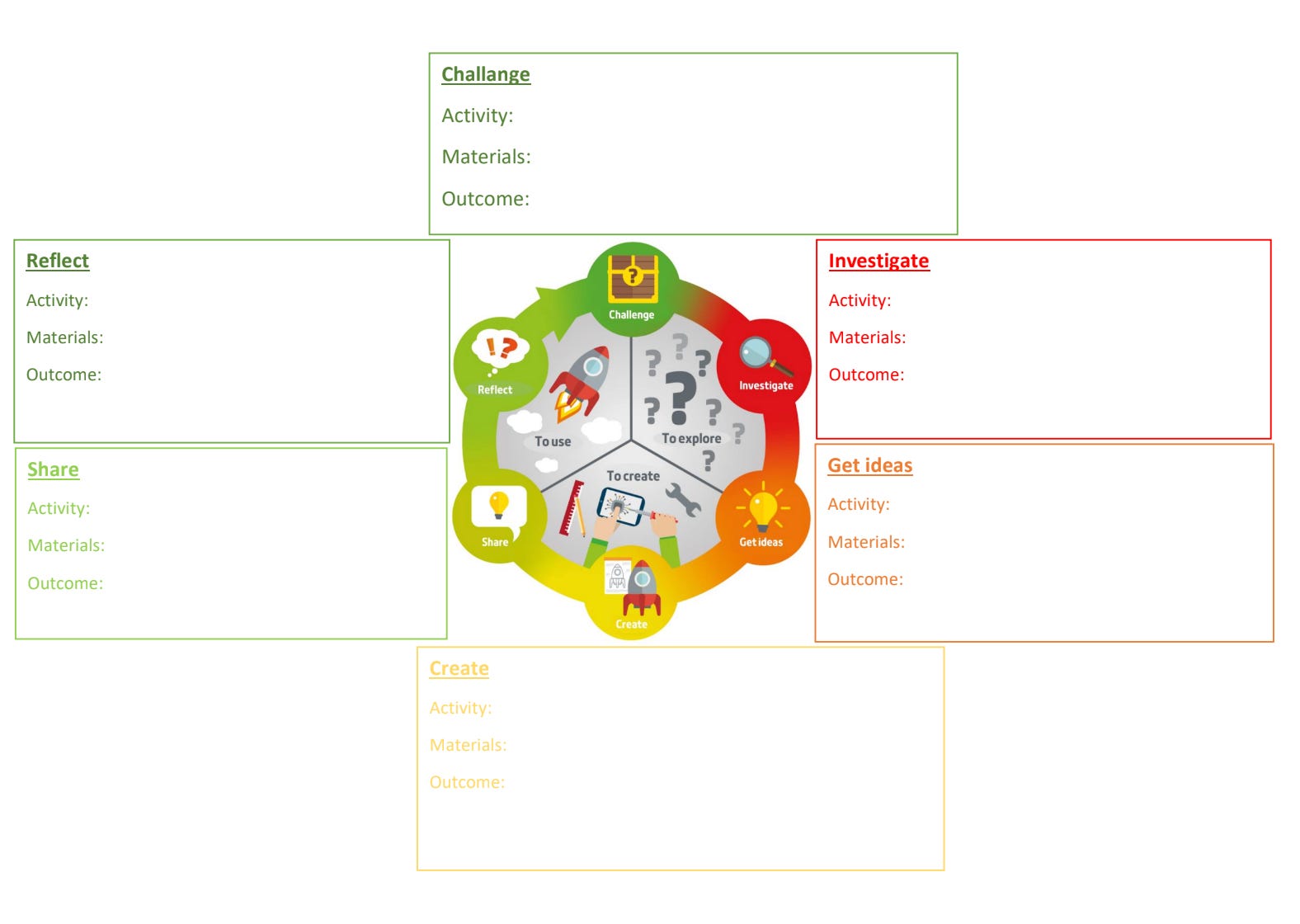
During the week, the group studied the Danish Design Circle methodology. This methodology promotes an investigative approach to design – or any problem – by using questioning, interactive and iterative activities, and reflection. It also focuses on developing critical thinking and teamwork skills. Students are given autonomy and are encouraged to be creative. The activities are designed to have real-world relevance and the methodology fosters the development of new ideas.
Gelsted School in the municipality of Middelfart (250 children aged 0-14) prioritises physical activity, outdoor learning, promoting awareness of biodiversity, fostering a strong sense of social community, cross-class partnerships, student agency empowering students to solve tasks and choose their own and craft and design and technology integration.
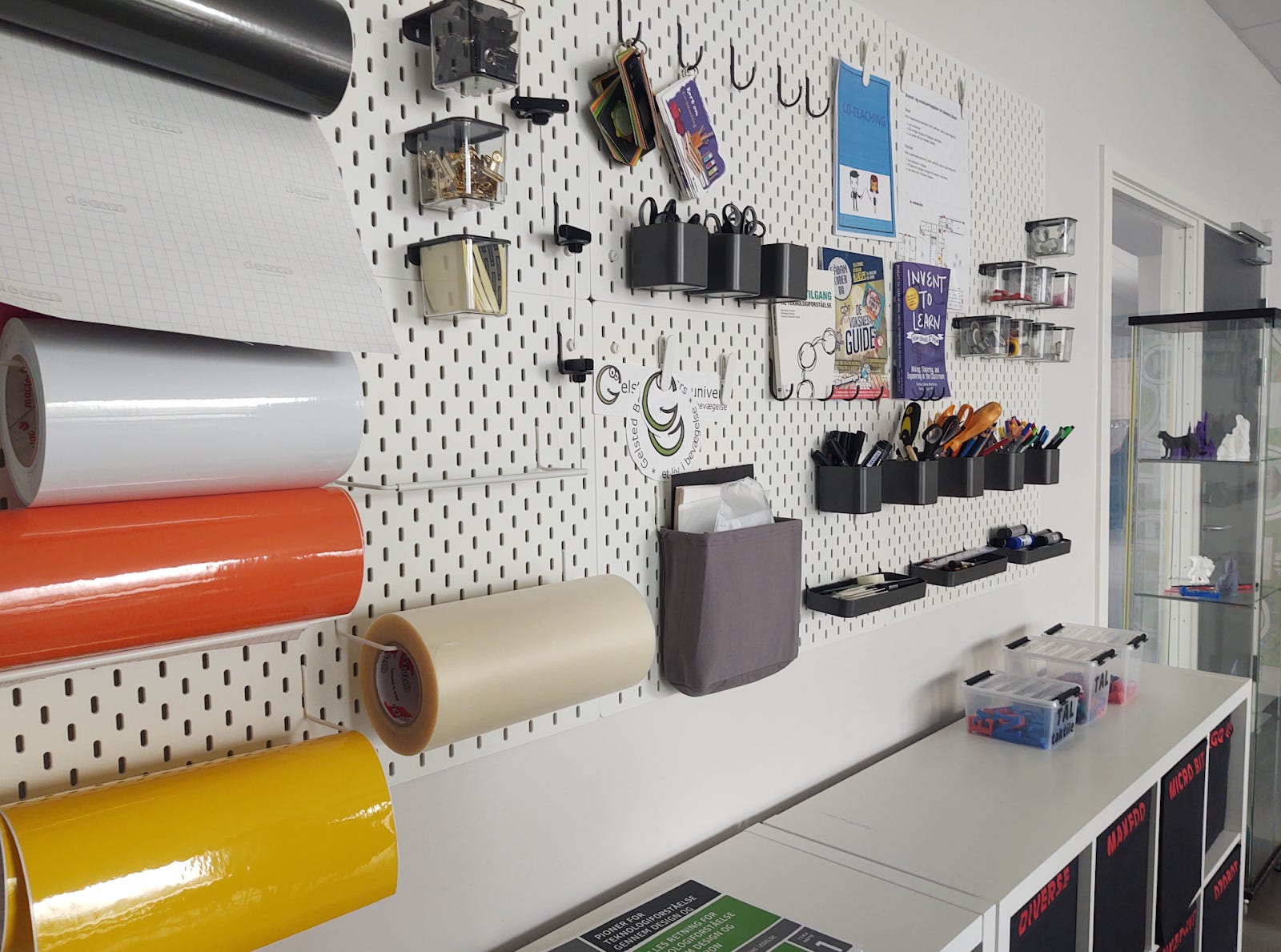
Many participants expressed admiration for the Danish system's focus on wellbeing and development before academic assessment. As one teacher noted, "The focus on wellbeing from an early age and having it as a subject makes a significant difference." Their new design block features three specialised teachers working collaboratively with each class. During our visit to the school we observed children learning in classrooms, outdoors, doing maths and language lessons supported by movement and physical activities in the large hall. We also undertook our own personal design challenge using the design circle methodology and the resources of the handicraft room and vinyl cutters in the design block.
Playful learning
Danish education's "playful mind" approach values exploration, encouraging children to choose their own tools to solve problems.
Karin Villumsen explained the Lego Foundation's five characteristics of playful learning:
Joyful engagement
Active involvement
Meaningful connections
Various modes of expression
Iterative thinking
Social interaction
Before coming to work at the municipality of Middelfart, Karin worked with Capital of Children in Bilund (where Lego HQ, Legoland and the Lego House are based) using playful learning methodology in the municipality’s schools. The playful learning approach in Bilund encourages students to be researchers, using project-based learning to develop in-depth cross curricular investigations based on engaging questions such as:
"What constitutes a great community?"
"What makes the Pokémon universe special, and how can we share it with others?"
"Where do we go when we die?" (This involved writing a chapter on Narnia, exploring religion, and visiting a graveyard and a funeral director.)
"How do music and film affect our lives?"
"How can we prevent war, and what does it mean to flee from war as a refugee?" (This included a visit to a refugee museum and discussions on the reasons people flee.)
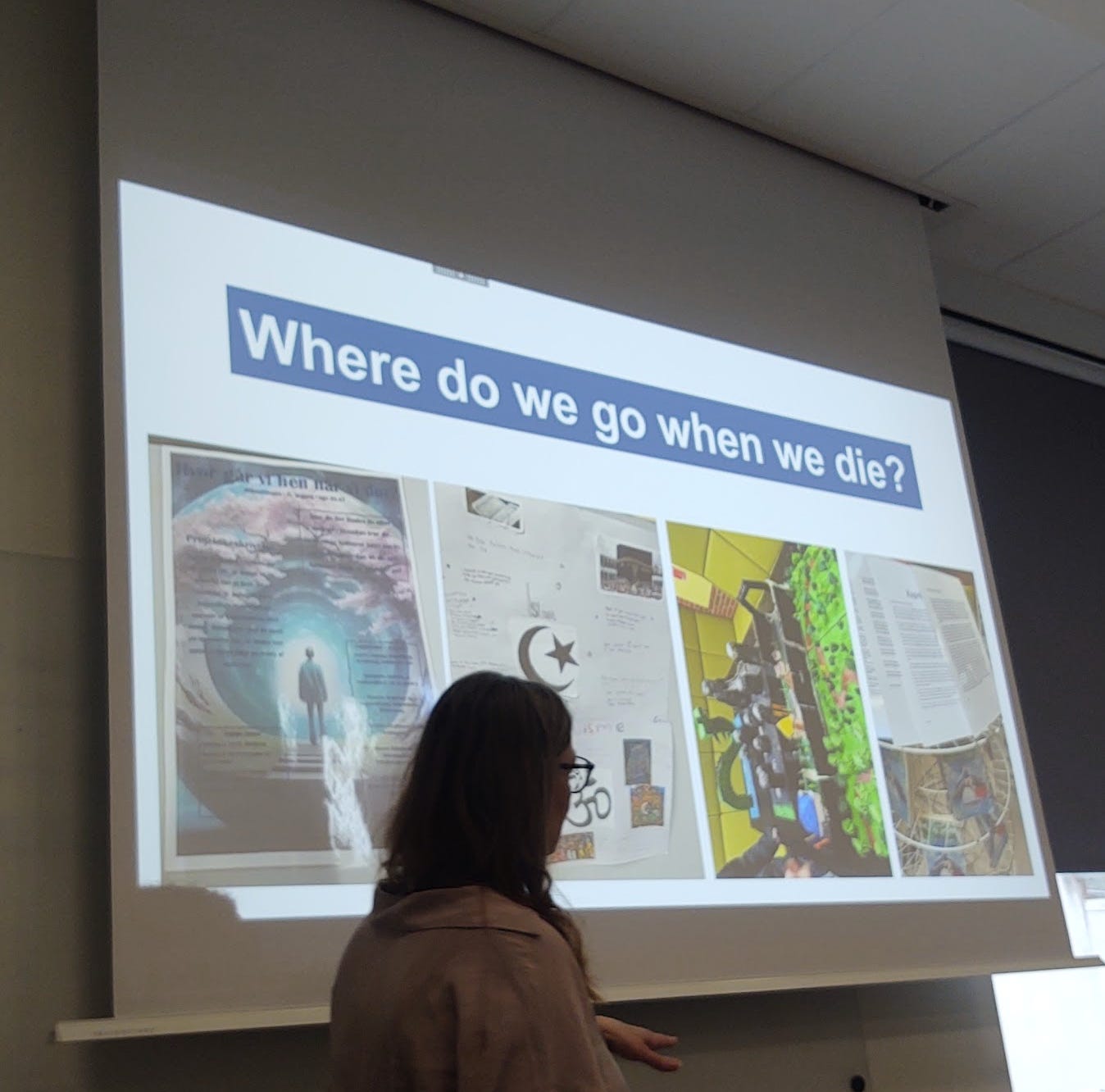
Karin explained how playful learning is not a specific activity, but rather a mindset. This mindset fosters children's motivation to be lifelong learners, as well as their ability to have trust and relate to others in positive ways.
Valuable lessons
Our cross-European collaboration highlights the common challenges that students and families face, with teachers from all countries identifying mental health concerns, mobile phone and social media issues, navigating truth versus misinformation, online safety, and AI changing employment landscapes as pressing issues. But there was also room for surprises – one insight was how physical movement enhanced computational thinking. Both Swedish and Danish teachers noted children understood instructions better when their bodies were involved in executing commands.
However, what emerged strongly was that teaching digital literacy is about fostering critical thinking, creative problem-solving and ethical awareness – and the Danish educational philosophy, with its emphasis on play, exploration and holistic development, offers valuable lessons for all school systems.
By combining design thinking, problem-solving and playful learning approaches in real-world contexts, we enable children to move beyond simply absorbing information. As a Danish educator said, “through playful learning children become generators of knowledge not just reproducers and grow up with hope and trust."
For more information about our collaborative Erasmus projects, visit co-create-erasmus.eu/test.
AI roundup
Practical AI tips and tricks from Rose Luckin
Rose Luckin is running a free one-hour practical webinar for heads, teachers and digital leads, exploring strategic AI implementation in the context of education. It’s online on Friday 23 May at 8am BST. Book here
Jisc AI resources
There’s been a smorgasbord of AI resources from Jisc recently, including a review putting the latest models of image generators to the test, a ‘live at Digifest’ video of Philippa Armstrong, learning technology coach at Nottingham College, discussing the current uses, potential benefits and concerns associated with generative AI in education, and a useful update on current developments around AI and its environmental impact.
‘Your cloud is drying my river’
And on the ongoing topic of AI’s environmental impact, a Guardian and SourceMaterial investigation has found that the big three tech companies – Google, Amazon and Microsoft – are using or developing water-hungry data centres in some of the world’s driest areas.
AI literacy
What does AI literacy mean for young people (aged 14-19)? It’s a topic We Are Open Co-Op is exploring with the BBC’s Responsible Innovation Centre. The research is starting from the perspective that AI is an extension of digital literacies, not a separate field, and aims to demystify AI, helping people recognise that the digital literacy skills they already possess are directly applicable to AI. The project is asking for suggestions of people, organisations, initiatives, frameworks, or resources they should consider.
Quick links

Revealing Reality’s Real Guide to Roblox examines what users of all ages can access and evaluates the safety features and age-verification measures meant to protect children. It finds that, despite the safety features in place, adults and children can easily interact in the same virtual spaces with no effective age verification or separation. The Guardian has covered the ‘deeply disturbing’ report.
Ofcom has has published the final version of its Children’s Codes under the Online Safety Act, setting out what sites must do to follow the law and protect children online. Here’s the Guardian’s explainer and Politico’s dive but children’s commissioner Rachel de Souza has said she is “disappointed”.
The TES argues that the DfE is getting tech wrong in schools. The government’s priority of creating tech infrastructure in schools risks repeating the failures of the past.
The latest Hello World magazine is out and discusses what digital literacy means, how it is taught in different countries around the world, and how educators are rethinking digital literacy for their students and themselves.
France has tightened up its rules around the use of mobile phones in school. There’s a complete ban in primary schools while students in middle schools (ages 11-15) must now lock any phones away in a pouch or locker at the start of the day. Meanwhile, in the UK, a national survey from the children’s commissioner showed that almost all primary schools said they required pupils to hand their phones to staff, or barred them from bringing the devices to school but 79% of secondary schools allowed students to keep their phones while banning their use or display; 8% required phones to be handed in, and just 3% stopped pupils from bringing them to school. Nearly 6% said pupils could use their phones during lessons when approved by a teacher.
More than a third of secondary teachers have reported misogynistic behaviour from pupils at their school a survey commissioned by BBC News suggests. About 40% of the teachers who responded also said they felt ill-equipped to handle such conduct.
UCL has published a study, Playing the Archive: from the Opies to the digital playground. Authors Andrew Burn, John Potter, Kate Cowan and Julia Bishop propose new ways of thinking about changes and adaptations to play and games. They also consider the Opies’ ways of working, landscapes of play over time and intergenerational dialogue about play.
We’re reading, listening…
Girls and computing: the Hello World podcast/vodcast is back and the latest episode is on empowering girls in computing. The guests are Rachel Arthur (Chief Learning Officer, Raspberry Pi Foundation), Dr Jessica Hamer (King's College London, School of Education) and Becky Patel (Tech She Can), who explore the current state of girls' engagement in computing.
Rethinking school in the age of AI: in this fascinating episode of the Undivided Attention podcast, cognitive neuroscientist Maryanne Wolf and global education expert Rebecca Winthrop explore how AI is shaking the very purpose of school to its core, why the promise of previous classroom tech failed to deliver, and how we might seize this moment to design a more human-centered, curiosity-driven future for learning. They look at ways we can develop children’s thinking, and plan learning so children can be in an ‘explore mode’ rather than just a ‘passenger mode’ and the importance of carrying out a pre- mortem about AI in education. Pair with this Guardian piece about whether AI is reducing our critical thinking skills and intelligence.
Society for hopeful technologists: in her recent newsletter Rachel Coldicutt explores the need and opportunities for a UK professional body for progressive technologists. She also promotes one of her virtual reading group events (for hopeful technologists) on 9 May to discuss Dan McQuillan’s book Resisting AI.
Give it a try
No Tails-telling
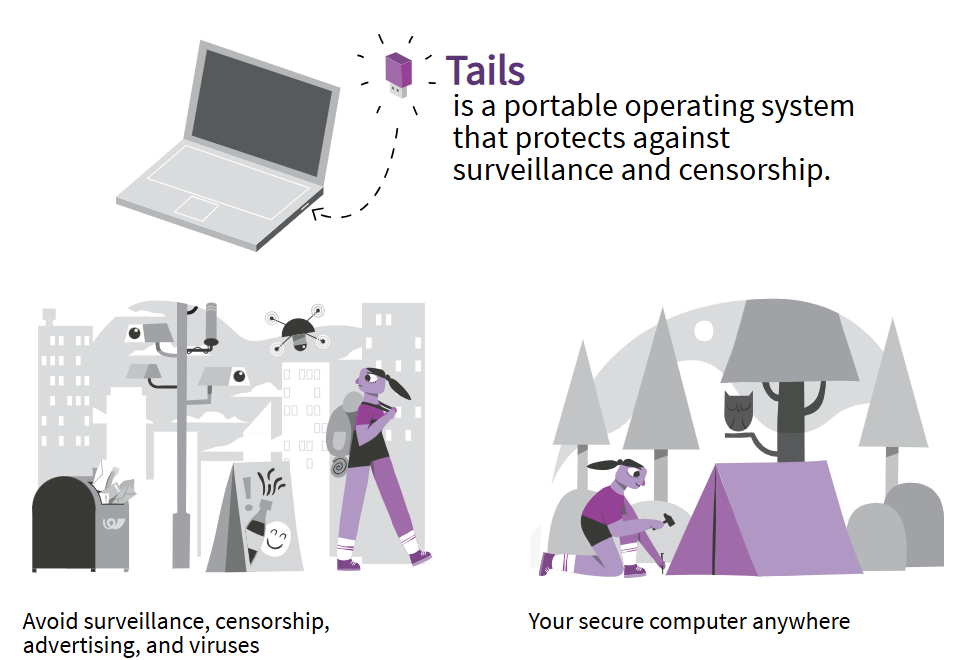
Thanks to Doug Belshaw for recommending Tails for anyone visiting countries with authoritarian tendencies.
Connected Learning is by Sarah Horrocks and Michelle Pauli